Showing posts with label Native Talk Tuesdays. Show all posts

Tuesday, May 13, 2014

Native Talk Tuesday #23


For today's Native Talk Tuesday, we have a bird and a woodland plant.

The bird featured in today's Native Talk Tuesday is Sphyrapicus ruber, commonly known as the Red-breasted Sapsucker. This species of sapsucker is found year-round in the coniferous and mixed forests of the Pacific Northwest--that is, from Northern California to southeast Alaska, west of the Cascadian and Canadian Coastal Ranges. The woodpecker below was seen at Silver Falls State Park, east of Salem, Oregon.


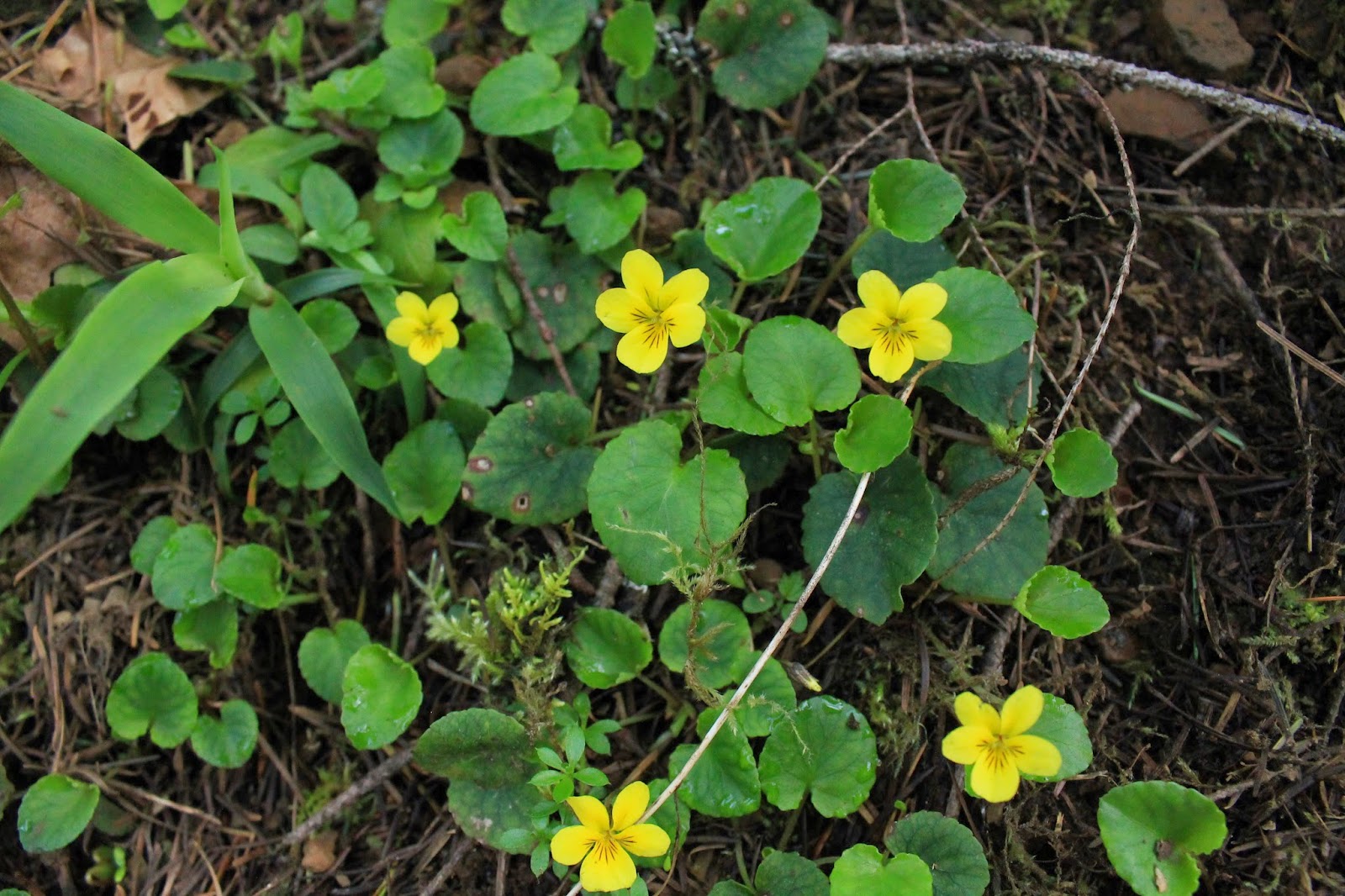
The plant featured in today's Native Talk Tuesday is Viola glabella, commonly known as the Stream Violet. Also known as the Yellow Wood Violet, this plant is identified due to its five yellow petals, with the lower three having dark purple lines. These lines are said to help guide pollinators to the correct spot on the flower. Found moist forests along streams, trails, and clearings, the Stream Violet can be confused with the Trailing Yellow Violet, which looks exactly the same to the untrained eye. What makes the Stream Violet different is the dark purple lines on its lower three petals--the Trailing Yellow Violet has violet (light purple) lines. The plant in the picture below was found at Silver Falls State Park, east of Salem in early April.

Tuesday, May 6, 2014

Native Talk Tuesday #22

For today's Native Talk Tuesday, we have a bird and a wetland plant.

The bird featured in today's Native Talk Tuesday is Picoides pubescens, commonly known as the Downy Woodpecker. This species of woodpecker is only found suburbs, orchards, parks, and forests; but are uncommon to rare in southeast Oregon. The woodpecker below was seen in a stand of trees next to a farmer's field east of Salem, Oregon.
 

The plant featured in today's Native Talk Tuesday is Lysichiton americanum, commonly known as the Skunk Cabbage. Also known as the Swamp Lantern, this plant is easily identified due to its large leaves, that are sometimes over 4 feet long. From early- to mid-Spring, one or more leaves turn yellow and a corncob-shaped spike is found within the yellow bract. Found wet meadows and muddy seepage areas from low to mid elevations, the Skunk Cabbage was used by the Native Tribes more for lining baskets like wax paper than for eating. Apparently, the only time it may have been eaten was in early Spring if there was a food shortage and only after roasting or steaming it first. The plant in the picture below was found at Silver Falls State Park, east of Salem.

Tuesday, April 29, 2014

Native Talk Tuesday #21

For today's Native Talk Tuesday, we have a reptile and a wildflower

The reptile featured in today's Native Talk Tuesday is Clemmys marmorata, commonly known as the Western Pond Turtle. This endangered species of turtles is only found west of the Cascade-Sierra mountain ranges, though it is supposedly extinct or near-so in the state of Washington . They are often found in still-water environments below one mile in elevation. The turtle below was seen with two others in Stayton's Wilderness Park.


The plant featured in today's Native Talk Tuesday is Crydalis scouleri, commonly known as the Scouler's Corydalis. This plant is easily identified from early- to mid-Spring due to it's stalk of pink flowers. Scouler's Corydalis is found along moist, shaded stream banks and forests and is named after Dr. John Scouler, who accompanied David Douglas on his explorations of the Pacific Northwest. The plant in the picture below was found at Silver Falls State Park, east of Salem.

Tuesday, April 22, 2014

Native Talk Tuesday #20

For today's Native Talk Tuesday, we have a bird and a shrub

The bird featured in today's Native Talk Tuesday is Pipilo maculatus, commonly known as the Spotted Towhee. With its black head, red sides, and white underside, it is easy to spot, especially with its black and white wings. The Spotted Towhee is distinguished from other Towhee species east of the Cascade Range by having a darker black head and back, and less white bars on its wings. The picture below was taken in Stayton's Wilderness Park


The plant featured in today's Native Talk Tuesday is Ribes sanguineum, commonly known as the Red-flowering Currant. In early spring you can see easily identify these plants due to their clusters of pink to red flowers. They are found at low to mid-elevations in open forests, disturbed sites, and even rocky slopes. The plant in the picture below was found at Silver Falls State Park, east of Salem. 


Tuesday, April 15, 2014

Native Talk Tuesday #19

For today's Native Talk Tuesday, we had a reptile and a flower.

The reptile featured in today's Native Talk Tuesday is Thamnophis sirtalis concinnus, commonly known as the Red-spotteed Common Garter Snake. This non-poisonous snake is found in a variety of habitats ranging from woodlands to open prairie and can also be seen in yards. The most astounding behavior that I have witnessed, as seen in the photo below at Stayton's Wilderness Park, is the ability to swim across a still-water pond.

 
The plant featured in today's Native Talk Tuesday is Lomatium utriculatum, commonly known as the Spring Gold. Also known as Fine-leaved Desert Parsley, this plant of the carrot family is found in a variety of environments ranging from dry, rocky slopes to open meadows at low elevations. The plant in the picture below was found at Silver Falls State Park, east of Salem.


Tuesday, April 8, 2014

Native Talk Tuesday #18

Today, both a native bird and a native flower will be featured.

The bird featured in today's Native Talk Tuesday is Turdus migratorius, commonly known as the American Robin. This robin is found in a variety of habitats ranging from woodlands to open prairie to city parks. The most common robin in America, this bird has a diet of berries, insects, and worms. The picture of the robin below was taken at St. Louis Ponds County Park, west of Gervais.


The flower featured in today's Native Talk Tuesday is Cardamine pulcherrima, commonly known as the Beautiful Bitter-cress. This plant of the Mustard Family is found in moist forests and stream banks at low elevations.Unlike the Angled Bitter-cress, which has three leaflets that are lobed, this bitter-cress has three-to-five leaflets that are lance-shaped. The flower in the photo was found at Silver Falls State Park, east of Salem.


Tuesday, April 1, 2014

Native Talk Tuesday #17

The animal featured in today's Native Talk Tuesday is Larus occidentalis, commonly known as the Western Gull. This gull is seen along the whole length of Oregon's coast throughout the year, but will be more abundant in Winter. All adult Western Gulls will have pink legs, a white head, a red-spotted yellow beak, and one white spot (or "mirror") near the tip of its first or second feather on each wing. Young western gulls will have mottled head feathers and a black-spotted yellow beak. The picture below was taken at Depoe Bay and features a young Western Gull in its third Winter.

Tuesday, March 25, 2014

Native Talk Tuesday #16

The animal featured in today's Native Talk Tuesday is Buteo jamaicensis, commonly known as the Red-tailed Hawk. This hawk is found in a variety of habitats ranging from woodlands to open prairie and cropland, as well as desert environments. The most common hawk in Oregon, this raptor can be seen perching on fences, telephone poles, tree branches and even houses!

Tuesday, March 18, 2014

Native Talk Tuesdays #15

The animal featured in today's Native Talk Tuesday is Anas clypeata, commonly known as the Northern Shoveler. This duck is found in marshes, ponds, and bays. In flight, both males and females show blue forewing patch, and both have a spoon-shaped bill. Other than the blue patch, the female is brown while the male is multi-colored. The Northern Shovelers below were found at Ankeny Wildlife Refuge, south of Salem.
 

Tuesday, March 11, 2014

Native Talk Tuesday #14

For today's Native Talk, I will actually talk about two non-native species--a rodent and a plant.

The animal featured in today's Native Talk Tuesday is Myocastor coypus, commonly known as the Coypu or Nutria. This river rat frequents shallow-water environments such as ponds and streams. Originally brought into North America from South America as a source of fur pelts, it is now considered an invasive species. Easily identifiable, the Nutria is as big as a beaver, but lacks the paddle-tail. The Nutria below was found at Ankeny Wildlife Refuge, south of Salem.


The plant featured in today's Native Talk Tuesday is Veronica chamaedrys, commonly known as the Birdseye Speedwell. This type of speedwell is native to Europe and Asia and was most likely brought over to America by someone you wanted it in their garden. The plant below was found at Stayton's Wilderness Park.

Tuesday, March 4, 2014

Native Talk Tuesday # 13

The animal featured in today's Native Talk Tuesday is Bucephala albeola, commonly known as the Bufflehead Duck. This type of duck nests in woodlands near small lakes and ponds. The male Bufflehead is identified by the large white patch on its mostly black head, while the female is similar but with a small, white, teardrop-shaped patch on its mostly black head. Bufflehead Ducks are found throughout most of Oregon during the Winter, but will migrate north to Canada for Summer breeding. The pair below were found at the Ankeny Wildlife Refuge south of Salem.

Tuesday, February 25, 2014

Native Talk Tuesday # 12

The animal featured in today's Native Talk Tuesday is Anas platyrhynchos, commonly known as the Mallard Duck. This type of duck frequents shallow-water environments such as ponds and streams. The male Mallard is easily identifiable by it's green head and white collar. The female, however, looks like many other female ducks but can be identified my the orange and black bill. The pair below were found at Stayton's Pioneer Park, near the covered bridge.

Tuesday, February 18, 2014

Native Talk Tuesday # 11

The plant featured in today's Native Talk Tuesday is Synthyris reniformis, commonly known as the Spring Queen. Belonging to the Figwort family, the Spring Queen is one of the first flowers to bloom, often just after snowfall, giving it another common name, the Snow Queen. The blue-violet flowers form in a terminal cluster. This type of plant is found at lower elevations from the Olympic Peninsula south into California, and from the Oregon Coast to the Cascade Range foothills.


The pictures here were taken at Silver Falls State Park within days after a snowfall in mid-February. As you can see, the flowers are violet with pink stamens.


Tuesday, May 28, 2013

Native Talk Tuesday #10

The plant featured in today's Native Talk Tuesday is Rododendron macrophyllum, commonly known as the Pacific Rhododendron. This type of Rhododendron produces pink flowers from May to July, depending on elevation and latitude. Almost all Pacific Rhododendrons in the forests will be scraggly instead of the bushy rhododendrons seen in many yards across the Willamette Valley. This type of plant is found from the coast to middle elevations and range from northern California to the Canadian border.


Although more widely spread in Oregon, the Pacific Rhododendron is the state flower of Washington. This species of rhododendron readily sprouts after a clear-cut or forest fire, bringing color to cleared or burned areas.


Tuesday, May 21, 2013

Native Talk Tuesday #9

The plant featured in today's Native Talk Tuesday is Rosa nutkana, commonly known as the Nootka Rose. For those that do not know the distinction between this rose and other wild roses, it is also refered to as the Wild Rose. Usually growing to 10 feet high, with soft, straight thorns at the base of each leaflet, this rose can sometimes be seen along the roadsides of the Willamette Valley. The leaflets, which alternate along the branches, contain 5 or 7 serrated leaves. The flowers are differentiated from the Baldhip Rose as they are larger, at 1.5 to 3 inches across. Unlike the Clustered Wild Rose, the Nootka Rose has only one flower at the end of each stem.

The Nootka Rose has pink, 5-petal flowers that are up to 3 inches across.

The Nootka Rose is often found in a variety of open habitats such as along the streambanks, clearings, meadows, thickets, and along roadsides of the Pacific Northwest from Southern Oregon to Glacier Bay, Alaska; occurring from low to middle elevations. This rose was named after one of several, if not many, native tribes who placed the leaves under and over their food to flavor it and keep it from burning while being cooked. Chewed leaves were applied to bee stings, and although I wouldn't recommend it, a tea made from strips of bark from this plant was used as an eyewash for cataracts or to enhance eyesight.

The Nootka Rose growing along a country road east of Salem.

Tuesday, May 14, 2013

Native Talk Tuesday #8

The plant featured in today's Native Talk Tuesday is Heracleum lanatum, commonly known as the Cow-Parsnip. This stinky plant, which has a hollow stem, develops clusters of white flowers. The Cow-Parsnip is often found along the streambanks, moist slopes, meadows, thickets, and along roadsides of the Pacific Northwest all the way to the Kenai Penninsula in Alaska. Occurring from sea level to alpine elevations, it is quite easy to find.

Cow-Parsnip at Sarah Helmick State Park

Before the flowers mature, the young stalks and leaf stems can be pealed or eaten raw or boiled like the Natives have done for centuries. The outer skin of the Cow-Parsnip contains a type of poison that can cause skin damage such as rashes, so unless you know how to handle the Cow-Parsnip, it is better to leave it alone. Due to this problem, the Cow-Parsnip is cut down along trails in the Oregon State Park System to keep visitors safe.

Tuesday, May 7, 2013

Native Talk Tuesday #7

The plant featured in today's Native Talk Tuesday is Camasia quamash, commonly known as the Common Camas. This perennial herb, which develops from a small bulb, has numerous grass-like leaves. Due to it's distinct flowers, and abundance in the Willamette Valley, it is quite easy to spot - at least in Spring. The Common Camas is often found along the roadsides and in natural areas of western Oregon and southwestern Washington. Occurring at low to middle elevations, it is quite common in the Willamette Valley. Depending on elevation, sunlight, temperature, and latitude (how far north you are), the Common Camas blooms from April to May.

Champoeg State Park has many Common Camas (photo above) near the visitor center.

Camas bulbs were planted by the Kalapuya natives at many sites in the Willamette Valley as the bulbs were later consumed during or right after flowering. After steaming in large pots for a day to make the Camas bulbs more palatable, they were used to sweeten other foods and eaten right away, or even sun dried for storage or trade. Meriwether Lewis observed what happens when ingested in large quantities, "Assuredly they produce flatulence: when in the Indian hut I was almost blown out by strength of wind." If you feel like steaming some Camas bulbs to eat yourself, make sure you are taking the bulbs from the Common Camas; as the Meadow-Death Camas (which has white flowers) are highly toxic and potentially fatal.

Monday, April 29, 2013

Native Talk Tuesday #6

The plant featured in today's Native Talk Tuesday is Trillium ovatum, commonly known as Western Trillium. This flower is easily identified due to the three uniquely-shaped leaves (sometimes there are up to five leaves). In Spring, the flower's three petals start out white and change to a pinkish purple before withering away.

This Western Trillium was found in Silver Falls State Park on 4/27/2013.

The Western Trillium is often found in moist environments such as streambanks and the temperate rainforest of Oregon, Washington, and southern Vancouver Island. Occurring at low to middle elevations, it is quite common in the Willamette Valley in moist, shaded areas such as state parks. Depending on elevation, sunlight, temperature, and latitude (how far north you are), the Western Trillium blooms from March to May. Nicknamed the 'Wake-robin' due to the fact it blooms at the same time the Robin appear or 'wake up' from Winter.

These two white-flowered Western Trillium were also found at Silver Falls State Park on 4/27/2013.

The Western Trillium below were found at Mary S. Young State Park on 4/24/2013; I think they might have been planted there.

Tuesday, April 23, 2013

Native Talk Tuesday #5


The animal featured in today's Native Talk Tuesday is Sciurus griseus, commonly known as the Western Gray Squirrel. It's primary habitat seems be woodlands and are often seen in city parks and farms that have many old trees. The Western Gray Squirrel is easy to spot as it's tail hairs seem to be more fluffier than other gray squirrels.


The plant featured in today's Native Talk Tuesday is Poa bulbosa, commonly known as the Bulbous Bluegrass. The photo below was taken near the path in Erratic Rock State Park, north of the town  of Sheridan, Oregon. The Bulbous Bluegrass is an introduced species of grass that has purple bulb-like structures instead of spikelets. It is common in disturbed, relatively dry habitats at low elevations, and like most grasses, can be spread into undisturbed ground by animals and the wind carrying the seeds.


Unfortunately, due to the fact that taking plants from state parks is illegal, non-native species like this one are able to spread until they become a problem. If you do see a non-native species on state land and you want to do something about it, it is best to notify the agency that watches over that land. For more information and close-up pictures, I suggest this website: The University of Montana--Missoula: Northern Rockies Natural History Guide

Tuesday, January 29, 2013

Native Talk Tuesday #4

The plant featured in today's Native Talk Tuesday is Acer circinatum, commonly known as the Vine Maple. The photo below was taken in Silver Falls State Park and is found at low to middle elevations throughout both the Coast Range and the Cascade Range. It is generally found under trees, near streams and usually any place that is moist to wet with some sunlight.


You can call it a shrub or scraggly tree, it grows up to a  height of 25 feet. The leaves are often distinguished from any other maple due to having 7-9 lobes instead of 3-5. In Autumn, the small leaves of the Vine Maple turn a bright red that is sometimes fringed with yellow. As with most maples, the fruits of the Vine Maple are the typical "wings" that spiral downward as they fall. The wood of the Vine Maple was used for snowshoe frames, drum hoops, and dining utensils. It still is used by some people today for making bows and arrows as the wood is dense and flexible when fresh. On one episode of Grant's Getaways, one local does just that; check it out at Grants Getaways: Taking Aim at Archery.