Showing posts with label Native Birds of Oregon. Show all posts
Tuesday, May 13, 2014
Native Talk Tuesday #23
For today's Native Talk Tuesday, we have a bird and a woodland plant.
The bird featured in today's Native Talk Tuesday is Sphyrapicus ruber, commonly known as the Red-breasted Sapsucker. This species of sapsucker is found year-round in the coniferous and mixed forests of the Pacific Northwest--that is, from Northern California to southeast Alaska, west of the Cascadian and Canadian Coastal Ranges. The woodpecker below was seen at Silver Falls State Park, east of Salem, Oregon.
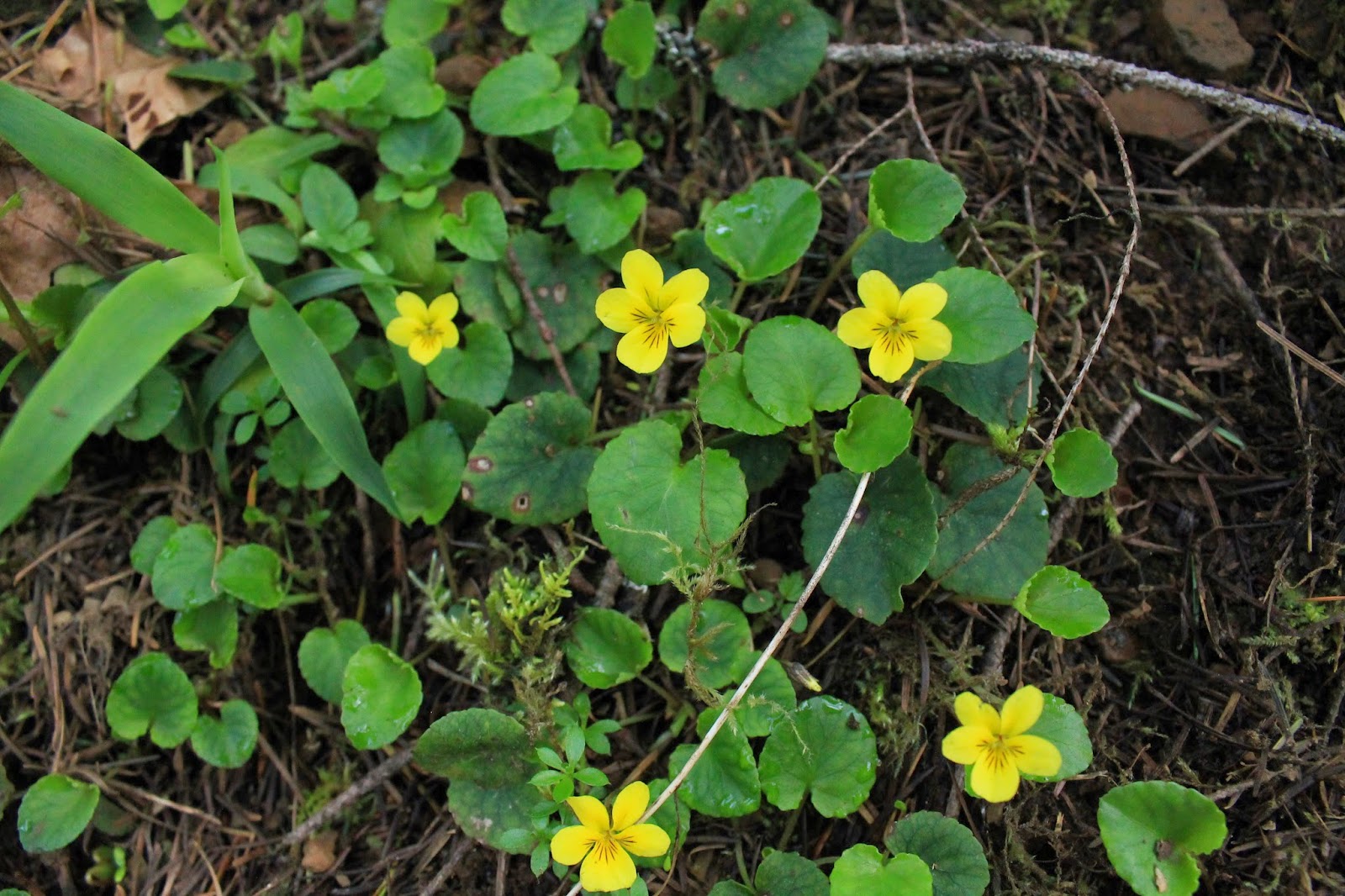
The plant featured in today's Native Talk Tuesday is Viola glabella, commonly known as the Stream Violet. Also known as the Yellow Wood Violet, this plant is identified due to its five yellow petals, with the lower three having dark purple lines. These lines are said to help guide pollinators to the correct spot on the flower. Found moist forests along streams, trails, and clearings, the Stream Violet can be confused with the Trailing Yellow Violet, which looks exactly the same to the untrained eye. What makes the Stream Violet different is the dark purple lines on its lower three petals--the Trailing Yellow Violet has violet (light purple) lines. The plant in the picture below was found at Silver Falls State Park, east of Salem in early April.
Tuesday, May 6, 2014
Native Talk Tuesday #22
For today's Native Talk Tuesday, we have a bird and a wetland plant.
The bird featured in today's Native Talk Tuesday is Picoides pubescens, commonly known as the Downy Woodpecker. This species of woodpecker is only found suburbs, orchards, parks, and forests; but are uncommon to rare in southeast Oregon. The woodpecker below was seen in a stand of trees next to a farmer's field east of Salem, Oregon.
The plant featured in today's Native Talk Tuesday is Lysichiton americanum, commonly known as the Skunk Cabbage. Also known as the Swamp Lantern, this plant is easily identified due to its large leaves, that are sometimes over 4 feet long. From early- to mid-Spring, one or more leaves turn yellow and a corncob-shaped spike is found within the yellow bract. Found wet meadows and muddy seepage areas from low to mid elevations, the Skunk Cabbage was used by the Native Tribes more for lining baskets like wax paper than for eating. Apparently, the only time it may have been eaten was in early Spring if there was a food shortage and only after roasting or steaming it first. The plant in the picture below was found at Silver Falls State Park, east of Salem.
The bird featured in today's Native Talk Tuesday is Picoides pubescens, commonly known as the Downy Woodpecker. This species of woodpecker is only found suburbs, orchards, parks, and forests; but are uncommon to rare in southeast Oregon. The woodpecker below was seen in a stand of trees next to a farmer's field east of Salem, Oregon.
The plant featured in today's Native Talk Tuesday is Lysichiton americanum, commonly known as the Skunk Cabbage. Also known as the Swamp Lantern, this plant is easily identified due to its large leaves, that are sometimes over 4 feet long. From early- to mid-Spring, one or more leaves turn yellow and a corncob-shaped spike is found within the yellow bract. Found wet meadows and muddy seepage areas from low to mid elevations, the Skunk Cabbage was used by the Native Tribes more for lining baskets like wax paper than for eating. Apparently, the only time it may have been eaten was in early Spring if there was a food shortage and only after roasting or steaming it first. The plant in the picture below was found at Silver Falls State Park, east of Salem.
Tuesday, April 22, 2014
Native Talk Tuesday #20
For today's Native Talk Tuesday, we have a bird and a shrub
The bird featured in today's Native Talk Tuesday is Pipilo maculatus, commonly known as the Spotted Towhee. With its black head, red sides, and white underside, it is easy to spot, especially with its black and white wings. The Spotted Towhee is distinguished from other Towhee species east of the Cascade Range by having a darker black head and back, and less white bars on its wings. The picture below was taken in Stayton's Wilderness Park
The plant featured in today's Native Talk Tuesday is Ribes sanguineum, commonly known as the Red-flowering Currant. In early spring you can see easily identify these plants due to their clusters of pink to red flowers. They are found at low to mid-elevations in open forests, disturbed sites, and even rocky slopes. The plant in the picture below was found at Silver Falls State Park, east of Salem.
The bird featured in today's Native Talk Tuesday is Pipilo maculatus, commonly known as the Spotted Towhee. With its black head, red sides, and white underside, it is easy to spot, especially with its black and white wings. The Spotted Towhee is distinguished from other Towhee species east of the Cascade Range by having a darker black head and back, and less white bars on its wings. The picture below was taken in Stayton's Wilderness Park
The plant featured in today's Native Talk Tuesday is Ribes sanguineum, commonly known as the Red-flowering Currant. In early spring you can see easily identify these plants due to their clusters of pink to red flowers. They are found at low to mid-elevations in open forests, disturbed sites, and even rocky slopes. The plant in the picture below was found at Silver Falls State Park, east of Salem.
Tuesday, April 8, 2014
Native Talk Tuesday #18
Today, both a native bird and a native flower will be featured.
The bird featured in today's Native Talk Tuesday is Turdus migratorius, commonly known as the American Robin. This robin is found in a variety of habitats ranging from woodlands to open prairie to city parks. The most common robin in America, this bird has a diet of berries, insects, and worms. The picture of the robin below was taken at St. Louis Ponds County Park, west of Gervais.
The flower featured in today's Native Talk Tuesday is Cardamine pulcherrima,
commonly known as the Beautiful Bitter-cress. This plant of the Mustard Family is found in moist forests and stream banks at low elevations.Unlike the Angled Bitter-cress, which has three leaflets that are lobed, this bitter-cress has three-to-five leaflets that are lance-shaped. The flower in the photo was found at Silver Falls State Park, east of Salem.
The bird featured in today's Native Talk Tuesday is Turdus migratorius, commonly known as the American Robin. This robin is found in a variety of habitats ranging from woodlands to open prairie to city parks. The most common robin in America, this bird has a diet of berries, insects, and worms. The picture of the robin below was taken at St. Louis Ponds County Park, west of Gervais.
Tuesday, April 1, 2014
Native Talk Tuesday #17
The animal featured in today's Native Talk Tuesday is Larus occidentalis,
commonly known as the Western Gull. This gull is seen along the whole length of Oregon's coast throughout the year, but will be more abundant in Winter. All adult Western Gulls will have pink legs, a white head, a red-spotted yellow beak, and one white spot (or "mirror") near the tip of its first or second feather on each wing. Young western gulls will have mottled head feathers and a black-spotted yellow beak. The picture below was taken at Depoe Bay and features a young Western Gull in its third Winter.
Tuesday, March 25, 2014
Native Talk Tuesday #16
The animal featured in today's Native Talk Tuesday is Buteo jamaicensis,
commonly known as the Red-tailed Hawk. This hawk is found in a variety of habitats ranging from woodlands to open prairie and cropland, as well as desert environments. The most common hawk in Oregon, this raptor can be seen perching on fences, telephone poles, tree branches and even houses!
Tuesday, March 18, 2014
Native Talk Tuesdays #15
The animal featured in today's Native Talk Tuesday is Anas clypeata,
commonly known as the Northern Shoveler. This duck is found in marshes, ponds, and bays. In flight, both males and females show blue forewing patch, and both have a spoon-shaped bill. Other than the blue patch, the female is brown while the male is multi-colored. The Northern Shovelers below were found at Ankeny Wildlife Refuge, south of Salem.
Tuesday, March 4, 2014
Native Talk Tuesday # 13
The animal featured in today's Native Talk Tuesday is Bucephala albeola,
commonly known as the Bufflehead Duck. This type of duck nests in woodlands near small lakes and ponds. The male Bufflehead is identified by the large white patch on its mostly black head, while the female is similar but with a small, white, teardrop-shaped patch on its mostly black head. Bufflehead Ducks are found throughout most of Oregon during the Winter, but will migrate north to Canada for Summer breeding. The pair below were found at the Ankeny Wildlife Refuge south of Salem.
Tuesday, February 25, 2014
Native Talk Tuesday # 12
The animal featured in today's Native Talk Tuesday is Anas platyrhynchos,
commonly known as the Mallard Duck. This type of duck frequents shallow-water environments such as ponds and streams. The male Mallard is easily identifiable by it's green head and white collar. The female, however, looks like many other female ducks but can be identified my the orange and black bill. The pair below were found at Stayton's Pioneer Park, near the covered bridge.
Subscribe to:
Posts (Atom)